

Fashion Wholesale: Unlocking the World of Bulk Fashion Distribution
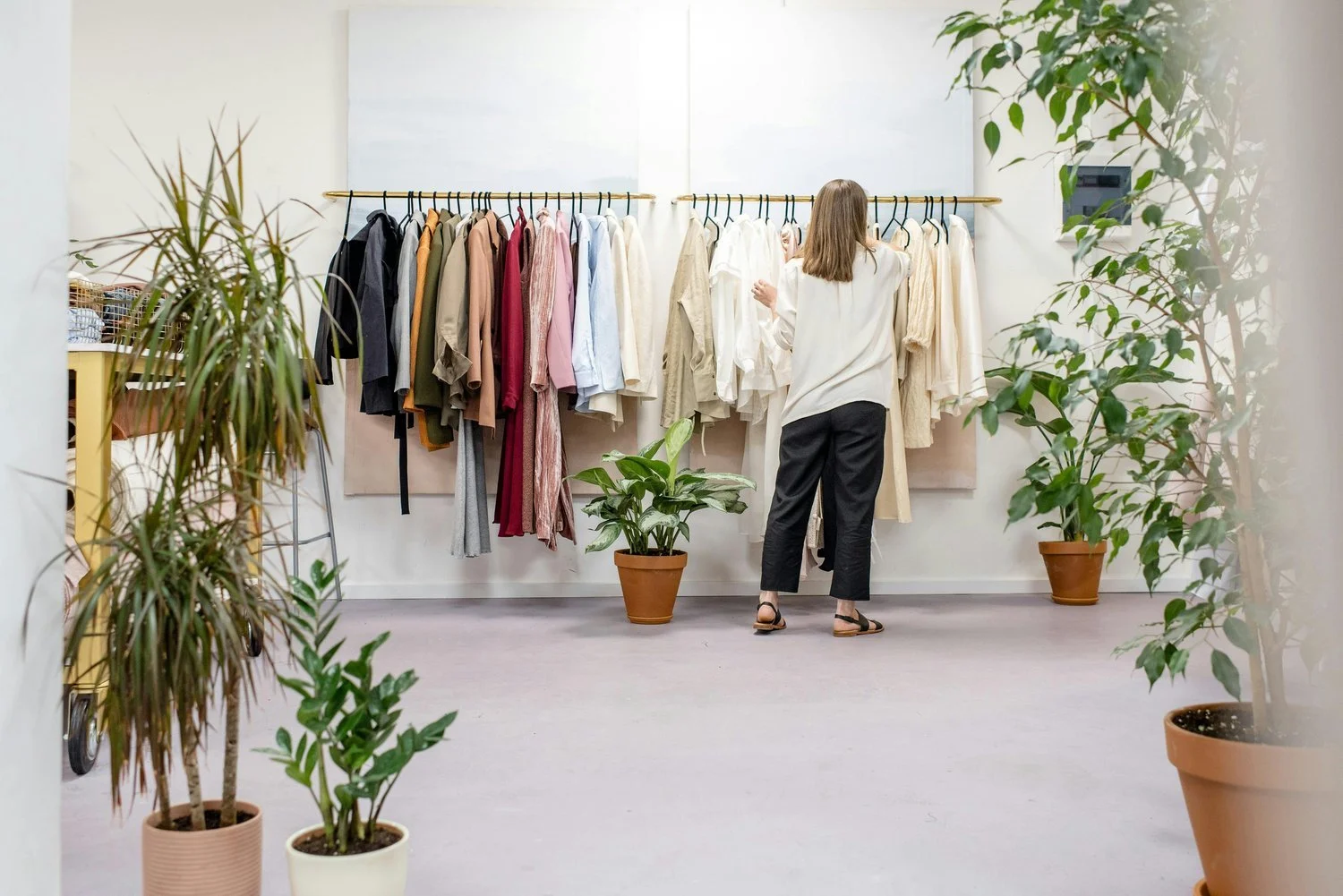
To wholesale or not to wholesale? That is the question. That is my spin on the question I often get asked:“What is Wholesale?” Fashion wholesale was and still is the backbone of the fashion industry depending on the fashion market level.
Although direct-to-consumer brands appeared to be the most hyped business model pre-covid, traditionally, most ready-to-wear brands rely on wholesale accounts. Recently, I was listening to a podcast and was astounded to hear that a resort wear brand launched in 2016 made 90% of its revenue via wholesale. Fashion wholesale is very much still relevant. Ignore it at your peril.
Don’t get me wrong, the direct-to-consumer-only business model does work. Direct to consumer or what the industry used to refer to as Private Label, is when you create a brand that is not available for wholesale, i.e. not available through third-party retailers, only allows customers to purchase via its own channels (store or website etc).
However, when developing your distribution strategy consider that wholesale or bulk sales plays a crucial role if you have limited resources. Scaling up with limited funds means making products accessible to a wide audience and one of the easiest ways to do that is via a wholesale model. If you are considering wholesale read on to understand the advantages and pitfalls.
Understanding Fashion Wholesale
Fashion wholesale is a supply chain model that involves the sale of products in bulk quantities to retailers, such as department stores, independent boutiques, and online stores.
It acts as a bridge to allow fashion brands to reach new customers, expand to new markets and reduce financial burdens and risks. Orders are placed and full or part-payment is made before the product is manufactured, which helps maintain liquidity and positive cash flow.
By definition fashion wholesale allows other multi-label retailers to sell the brand’s products at a profit. That profit margin is subject to negotiation and may vary depending on the market. For example, some high-end retailers may expect a 60%-80% margin at retail. Whilst mass market retailers might accept lower margins since more volume is sold.
Speaking of volume, wholesale works on the premise of larger quantities. The wholesale brand must set a minimum quantity the retailer needs to order to make a profit. Established brands think in terms of collections, which includes style, colour, materials, and sizes. For very successful brands they control what the Retailer receives and may stipulate the retailer orders the entire collection and in the specific sizes. This usually reflects what is negotiated with the brands’ manufacturer. By definition, fashion wholesale is a B2B (business-to-business) model.
Benefits of Fashion Wholesale: Reduced Risk of Unsold Inventory
Direct to retail to consumer always runs the risk of having excess inventory at the end of the selling season. With a wholesale model, since payment is made upfront before manufacturing or agreed timeline, the risk is transferred from you to the retailer. Who holds the title of the goods, and is responsible for sale. Unlike a consignment model when the retailer sends back any unsold stock.
Benefits of Fashion Wholesale: Economies of Scale & Efficiency & Spreading Risk
Orders are secured in advance of production and brands can use this knowledge to negotiate with suppliers based on the quantity of orders they place with the factory. This is known as an economy of scale. If you only place orders for direct retail, you may have less quantity to manufacture and therefore you miss out on potential cost-savings.
With regards to spreading or reducing your risk or exposure to unsold inventory let’s say for example the minimum quantity the factory accepts is 300pcs, if I have 2 wholesale accounts then you could spread that risk with Retailers. By stipulating that retailers must order a minimum of one hundred pieces (approximating 100 per retailer and 100 sold directly). Of course, you should have built a ‘must-have brand’ to wield some negotiating power. Retailers will want to reduce their risk by ordering the lowest quantity possible.
Benefits of Fashion Wholesale: May benefit from the Brand Equity
Retailers, whether physical stores or e-commerce have a brand reputation, some have a loyal customer base, who may try a brand for the first time on the recommendation of being in their favourite store.
Successful retailers have more foot traffic or online visitors than individual brands especially legacy retailers such as Net-a-porter, Liberties of London etc. For e-commerce that sense of familiarity and trust may also work on the level that consumers are confident their personal data and credit card information is safe with larger or more established retailers.
Benefits of Fashion Wholesale: Widen Customer Base
If you target the correct Retailer who shares a similar target market with your brand you can attract new customers, who may buy directly from you in the future. The most important factor is wholesale allows you to have either an online or physical presence in multiple markets without incurring huge costs.
Wholesale accounts get you distribution in more countries and broaden your customer base. In an economic downturn, this is a critical strategy, since one market may be in the doldrums whilst another maintains sales and therefore may result in less impact on your revenue.
Benefits of Fashion Wholesale: Cross-marketing
Since brands help retailers offer new fashion trends and seasonality there is an opportunity for cross-marketing and sharing the cost of communication. A brand and a retailer may create content online, posters in store, or even co-advertising in traditional media like fashion magazines. The retailer may have the brand cache or connections to create PR buzz and secure lower media costs due to long-term relationships which would in turn help your brand.
Benefits of Fashion Wholesale: Serendipity
Although this sounds intangible, and of course may not always happen, there is something to be said for serendipitous moments, whilst being stocked in one store, I have been approached by stylists, and photographers, and found a life-long network from other brands. Wholesaling in specific retailers especially retailers can expand your network, allow you to meet other founders, and pick up best practice tips from the retailer and other wholesalers.
Pitfalls of Fashion Wholesale
Of course, not every fashion business works wholesale distribution. For example, if your product is unique, or the cost prices are high, the price the end customer is willing to pay may not support a wholesale model. Carry out some cost analysis and you will quickly find out if your product can be sold at wholesale and the quantity required.
Some fashion business models may not support wholesale such as bespoke, or if the pieces are hand-made, or one-off. However, we are seeing upcycled brands providing unique products that disrupt this traditional idea.
As mentioned earlier suppliers/manufacturers have Minimum Order Quantities (MOQs) therefore this must be taken into consideration when offering your MOQs to retailers. Some smaller retailers may be clients that you grow with over time. If they find it challenging to meet your minimums you may have to forgo supplying them, which could mean missing out on a future retail star.
Not all wholesale accounts are made equal. Some retailers are notorious for long invoice payment terms such as 90 days, some do not pay at all. I have heard and experienced first-hand horror stories of non-payment, however, that could happen with consignment. So due diligence is required in each scenario. Don’t be afraid to ask questions, do some background research to look into the finances of the retail business. Ask if other brands that supply that retailer.
Ensure MOUs or contracts are signed and returned and provide a paper trail. I would also recommend you always ask for a deposit of at least 30% to cover the cost of manufacturing. Unfortunate, or unforeseen circumstances could see orders cancelled at the last minute.
Take COVID-19 for instance, many retailers through no fault of their own had to cancel orders to survive the sales downtown. In such instances empathy and coming to mutually beneficial agreements are the only long-term solutions.
Conclusion
The advantages of cost savings, widening target market, scalability, and promotional opportunities make fashion wholesale a cornerstone of the industry.
While challenges exist, such as minimum order quantities, finding the right wholesale accounts and following up on admin and payment terms, the benefits of fashion wholesale outweigh the drawbacks.
As the industry continues to evolve, brands would do well not to ignore third-party retailers as the entire industry must adapt to changing consumer preferences and technological advancements to stay competitive and continue delivering to savvy consumers.
Singapore
In Singapore, wholesale accounts are as rare as unicorns, with retailers preferring consignment arrangements. To survive small fashion brands often rely on corporate or bulk orders from organizations that make bulk orders for special occasions such as National Day, Mother’s Day, Teachers Day and Women’s Day. The price is not always at Wholesale since it’s often a once a year purchase. I’m told it’s usually at retail or a negotiated discount. If you are an entrepreneur based in Asia you could do well with ensuring you know the difference between discounts and wholesale pricing if you hope to expand and sell globally.
Get in touch if you want help with your fashion brand.
Listen to my podcasts Fashion Hub Singapore
Follow me on Instagram @anisajohnny

From Paris to Singapore: An Interview With Christelle Nouviaire-Domec

Image Credit Christelle Nouviarie-Domec
Christelle Nouviarie-Domec is a rare gem. A trained fashion designer, with vast experience across design, retail and marketing.
In my latest podcast, I spoke with Christelle to find out how she navigated such a varied path in the fashion industry. From studying at the iconic Studio Berçot in the '90s to cutting her teeth in fashion at the ateliers of Lanvin, Christelle has carved a distinctive path in the world of fashion.
It's extremely rare to encounter someone like Christelle, who counts working in high fashion and shaping the retail landscape in Singapore as notable accolades.
The latest addition to her achievements is fostering sustainable practices in the heart of France. From our conversation, Christelle emerges as a beacon of creativity, authenticity, and social responsibility in the ever-evolving world of fashion
Her journey serves as an inspiration for aspiring designers and entrepreneurs, urging them to not only craft beautiful garments but to weave narratives that transcend trends and contribute positively to the global fashion landscape.
Starting With ‘The Best’ In Fashion
Having studied fashion design at Studio Bercot, a Paris-based institution with luminaries like Isabel Marant and Camille Bidault Waddington, Christelle’s first start in fashion was working as an Accessories Design Assistant at Lanvin. She also worked under legendary designer Claude Montana, describing the period as “the reign of Haute Couture.”
She describes haute couture as an “incredible experience as everything is possible, budget isn’t an issue, if you want a pink silk trench coat covered with crystals it’s possible.”
Her role as a designer was to develop bespoke accessories and translate runway designs for clients ordering made-to-measure items. In the 90s, her clientele consisted of celebrities and royals. Later, she transitioned into the glamorous world of fashion magazines, where Christelle worked with iconic supermodels such as Linda, Christy, Helena, and Carla."
Fashioning A Career In The 90s
Drawing from her experiences at Vogue Italia during the 90s, Christelle describes the excitement of collaborating with top fashion photographers and the thrill of international travel while covering fashion runways for Conde-Nast US Magazines.
Listening to her description of those moments gave me goosebumps. From my perspective, the 90s can be considered the golden age of fashion. Christelle also agrees that the decade was characterized by a unique convergence of creativity, resources, and the first emerging global influence for the fashion industry.

Has Fashion Had Its Heyday?
Critics of contemporary fashion often contend that the fashion industry reached its pinnacle in the 1990s. Adopting a more pragmatic stance, Christelle asserts that fashion is inherently about “eternal renewal.” Emphasizing that the 90s were marked by a palpable momentum and dynamism. Recalling the era, she highlights a key differentiator: the resources dedicated to producing awe-inspiring runway shows
Fashion Today
Christelle acknowledges how fashion has changed, whilst the offerings in the 90s were broad, today the industry is fragmented.
During the 1990s, designers gained recognition for expressing themselves through their distinctive stylistic languages. From Galliano at Dior to Rick Owens, each utilized fashion as a means of storytelling, drawing inspiration from their creative impulses at that particular time.
When discussing the evolution of fashion, Christelle suggests that while the 90s may have held a special allure, the current era of fashion is marked by a different kind of dynamism — a continuous reinvention that reflects the industry's adaptability and resilience.
In the past, a handful of designers made the rules. Thankfully the industry's evolution has given rise to diverse voices in a multifaceted market.
As the fashion landscape continues to evolve, each era contributes to the rich tapestry of the industry's history, ensuring its perpetual renewal.
The Singapore Connection
Christelle was invited to Singapore by retail pioneer Mr Tang Wee Sung to reshape the fashion merchandising mix and brand image of Tangs Orchard. The experience offered valuable insights into the Singaporean market, known for its promotion-driven consumer behaviour and a unique blend of cultural influences that contribute to a distinctive fashion landscape.
Her role at Tangs gave her unique insights into the Singaporean department store customer. "All the global brands have a presence in Singapore, and it serves as a testing ground for trying out new retail concepts before launching them worldwide. The locals here are incredibly curious, and shopping is seen as a leisure activity. I played a significant role in providing a retail platform for local designers. I created a unique retail space for SG50's birthday celebration, where we curated collections from new talents and provided mentorship for emerging fashion designers."
Returning To France
Christelle has subsequently returned to France, where she works as an adjunct lecturer at an international fashion school. Her focus is on emphasizing the significance of a unique aesthetic, an understanding of fashion history and staying abreast of key socio-cultural trends.
Christelle has also founded a consultancy specializing in branding and retail strategy for fashion, beauty, and sustainable brands.
Additionally, she also found the time to curate a festival focused on water preservation. The event aims to foster collaboration between scientists and artists to share their expertise.
Advice for Fashion Entrepreneurs
For those aspiring to enter the French market, Christelle reminds fashion entrepreneurs that Paris is the epicentre of fashion, with consumers who are already overwhelmed with choice.
To enter the French market Christelle's advice is for fashion entrepreneurs to find their sense of authenticity, emphasizing that the French customer prioritizes design and quality materials.
Christelle also adds that to succeed in the French market, designers should “focus on design and use quality fabrics like linen, cotton, and silk because French customers prefer natural materials”. In a world full of fashion options, she asks, "Who needs another pair of trousers or dress?"
According to Christelle, the key is to create a unique style that aligns with the brand's values. Designers should consider what's happening globally, in art, and socio-economic trends. She advises, "Develop your fashion universe with a distinct fashion language and style, then turn it into wearable clothes for customers."
Christelle believes that telling stories on the runway is the apogee of style, however, the most important thing is that designers must understand their clients and their needs.
Fashion And The Future of Technology
In discussing fashion's fast-changing landscape, Christelle offered some simple insights into the intersection of fashion and technology. She intriguingly suggests, “The body may be augmented, but I think the language of dressing the body (jacket/dress/shirt/pants, etc.) will remain”.
Subtly implying that the future might be more inclined towards consumers whose sense of belonging is tied to a particular group or style (affiliation), brands that tap into this notion are the ones that will truly distinguish themselves. Examples, such as 'normcore' brands and Margiela in the 90s, highlight instances where these subtle signs of affiliation significantly make a difference in the fashion context.
3 Tips for Fashion Entrepreneurs
To conclude every podcast interview, I ask my guest for three key insights, and Christelle did not disappoint. She delivered three essential tips for aspiring entrepreneurs. Her advice included, 'Don't copy others; be authentic. Pay attention to the supply chain because sustainability is not an option. View fashion as a theatrical experience, offering versatile yet singular options to customers.
Creating Social Impact
Fashion Hub Singapore was established to provide tools for social entrepreneurs to learn from industry experts. The podcast's mission is to equip entrepreneurs with the necessary tools to create exceptional, customer-centric brands and foster positive social impact.
Drawing from her passion for sustainability, Christelle believes that brands can make a social impact by ensuring appropriate working conditions, prioritizing quality and durability in clothing, and exploring innovative textiles made from recycled components. She adds, “I think the future of fashion will also be in the research of innovative textiles”.
Christelle’s career has spanned from haute couture in Europe to reshaping retail in Singapore. I thoroughly enjoyed her insights on the journey — a celebration of creativity, authenticity, and a commitment to a sustainable future.
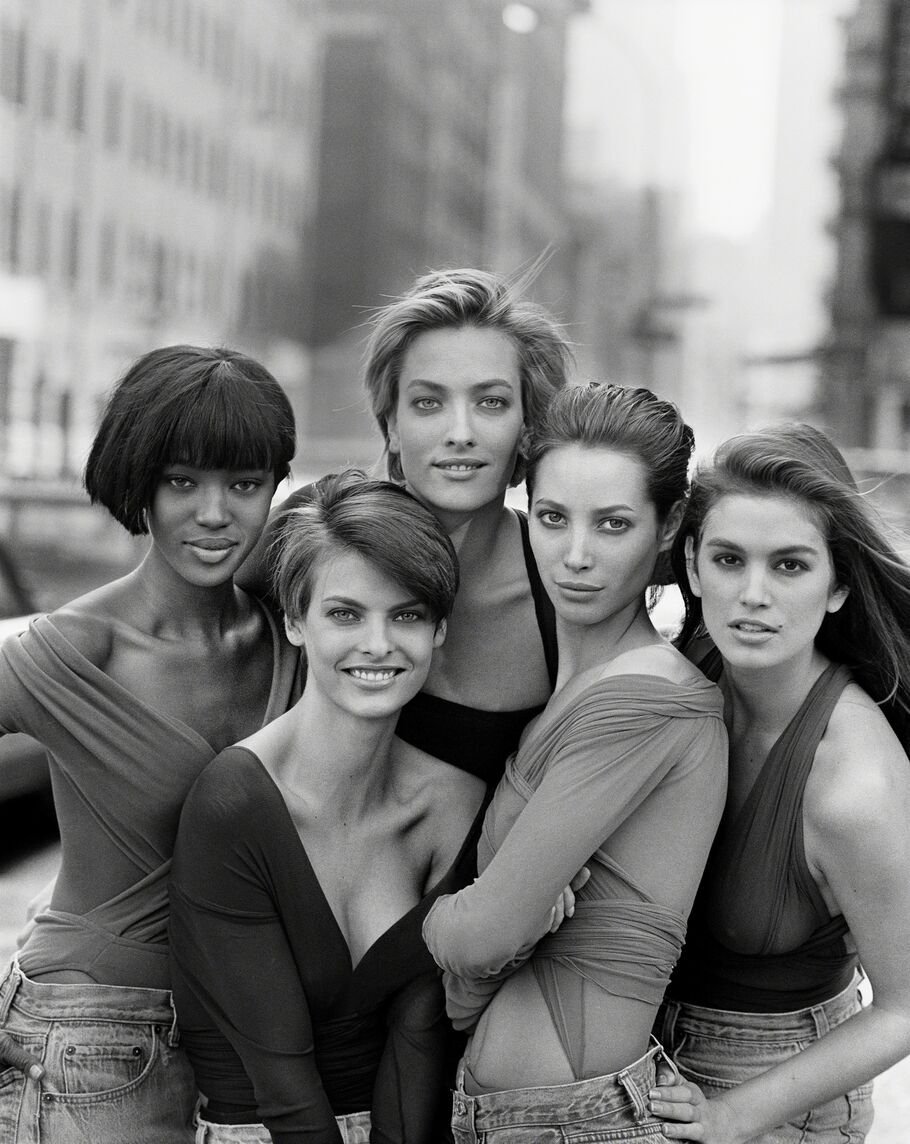
The Iconic ‘Supers’ shot by Peter Lindbergh (C) British Vogue 1990
Listen to the podcast interview with Christelle by clicking the link below.