

Fashion Wholesale: Unlocking the World of Bulk Fashion Distribution
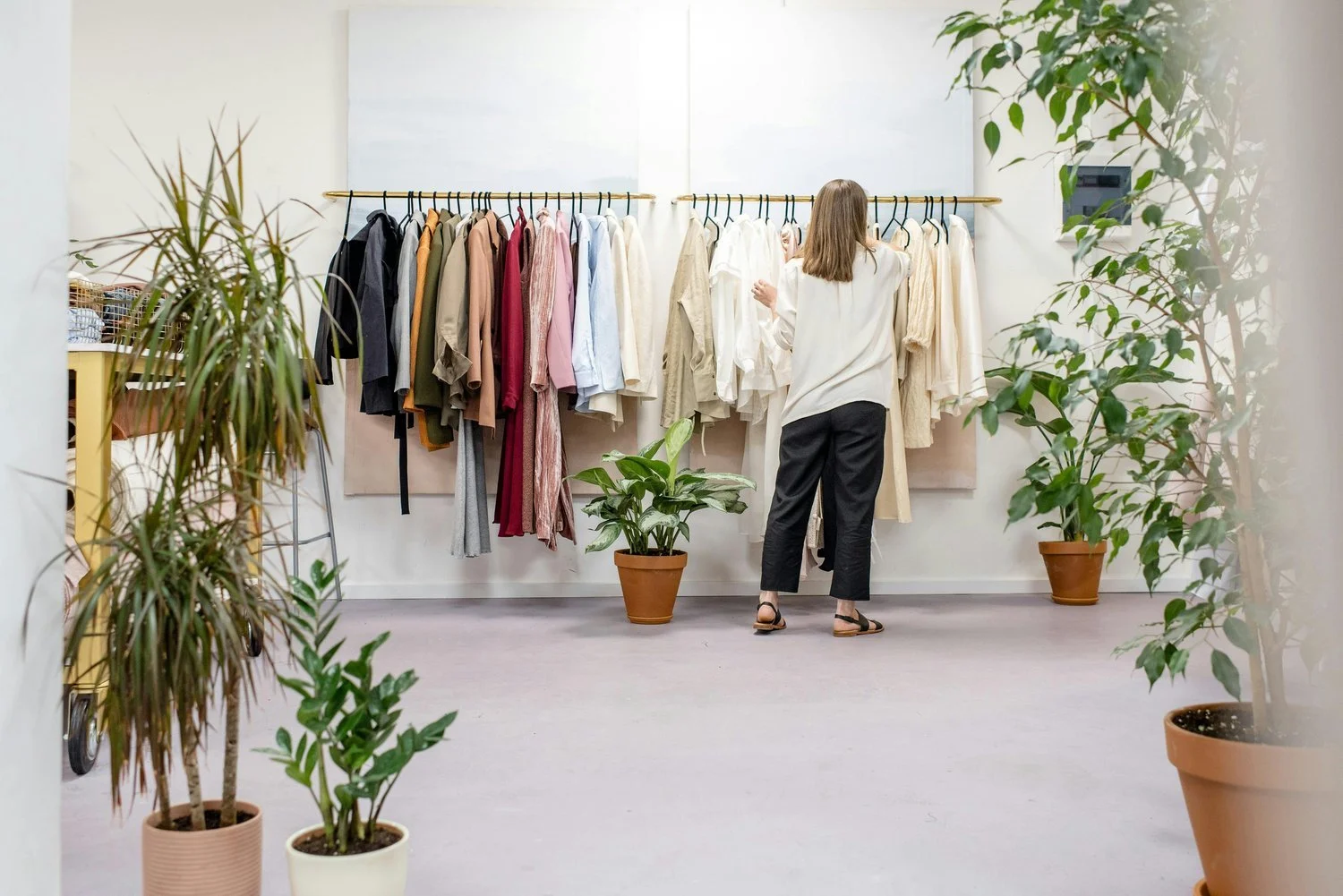
To wholesale or not to wholesale? That is the question. That is my spin on the question I often get asked:“What is Wholesale?” Fashion wholesale was and still is the backbone of the fashion industry depending on the fashion market level.
Although direct-to-consumer brands appeared to be the most hyped business model pre-covid, traditionally, most ready-to-wear brands rely on wholesale accounts. Recently, I was listening to a podcast and was astounded to hear that a resort wear brand launched in 2016 made 90% of its revenue via wholesale. Fashion wholesale is very much still relevant. Ignore it at your peril.
Don’t get me wrong, the direct-to-consumer-only business model does work. Direct to consumer or what the industry used to refer to as Private Label, is when you create a brand that is not available for wholesale, i.e. not available through third-party retailers, only allows customers to purchase via its own channels (store or website etc).
However, when developing your distribution strategy consider that wholesale or bulk sales plays a crucial role if you have limited resources. Scaling up with limited funds means making products accessible to a wide audience and one of the easiest ways to do that is via a wholesale model. If you are considering wholesale read on to understand the advantages and pitfalls.
Understanding Fashion Wholesale
Fashion wholesale is a supply chain model that involves the sale of products in bulk quantities to retailers, such as department stores, independent boutiques, and online stores.
It acts as a bridge to allow fashion brands to reach new customers, expand to new markets and reduce financial burdens and risks. Orders are placed and full or part-payment is made before the product is manufactured, which helps maintain liquidity and positive cash flow.
By definition fashion wholesale allows other multi-label retailers to sell the brand’s products at a profit. That profit margin is subject to negotiation and may vary depending on the market. For example, some high-end retailers may expect a 60%-80% margin at retail. Whilst mass market retailers might accept lower margins since more volume is sold.
Speaking of volume, wholesale works on the premise of larger quantities. The wholesale brand must set a minimum quantity the retailer needs to order to make a profit. Established brands think in terms of collections, which includes style, colour, materials, and sizes. For very successful brands they control what the Retailer receives and may stipulate the retailer orders the entire collection and in the specific sizes. This usually reflects what is negotiated with the brands’ manufacturer. By definition, fashion wholesale is a B2B (business-to-business) model.
Benefits of Fashion Wholesale: Reduced Risk of Unsold Inventory
Direct to retail to consumer always runs the risk of having excess inventory at the end of the selling season. With a wholesale model, since payment is made upfront before manufacturing or agreed timeline, the risk is transferred from you to the retailer. Who holds the title of the goods, and is responsible for sale. Unlike a consignment model when the retailer sends back any unsold stock.
Benefits of Fashion Wholesale: Economies of Scale & Efficiency & Spreading Risk
Orders are secured in advance of production and brands can use this knowledge to negotiate with suppliers based on the quantity of orders they place with the factory. This is known as an economy of scale. If you only place orders for direct retail, you may have less quantity to manufacture and therefore you miss out on potential cost-savings.
With regards to spreading or reducing your risk or exposure to unsold inventory let’s say for example the minimum quantity the factory accepts is 300pcs, if I have 2 wholesale accounts then you could spread that risk with Retailers. By stipulating that retailers must order a minimum of one hundred pieces (approximating 100 per retailer and 100 sold directly). Of course, you should have built a ‘must-have brand’ to wield some negotiating power. Retailers will want to reduce their risk by ordering the lowest quantity possible.
Benefits of Fashion Wholesale: May benefit from the Brand Equity
Retailers, whether physical stores or e-commerce have a brand reputation, some have a loyal customer base, who may try a brand for the first time on the recommendation of being in their favourite store.
Successful retailers have more foot traffic or online visitors than individual brands especially legacy retailers such as Net-a-porter, Liberties of London etc. For e-commerce that sense of familiarity and trust may also work on the level that consumers are confident their personal data and credit card information is safe with larger or more established retailers.
Benefits of Fashion Wholesale: Widen Customer Base
If you target the correct Retailer who shares a similar target market with your brand you can attract new customers, who may buy directly from you in the future. The most important factor is wholesale allows you to have either an online or physical presence in multiple markets without incurring huge costs.
Wholesale accounts get you distribution in more countries and broaden your customer base. In an economic downturn, this is a critical strategy, since one market may be in the doldrums whilst another maintains sales and therefore may result in less impact on your revenue.
Benefits of Fashion Wholesale: Cross-marketing
Since brands help retailers offer new fashion trends and seasonality there is an opportunity for cross-marketing and sharing the cost of communication. A brand and a retailer may create content online, posters in store, or even co-advertising in traditional media like fashion magazines. The retailer may have the brand cache or connections to create PR buzz and secure lower media costs due to long-term relationships which would in turn help your brand.
Benefits of Fashion Wholesale: Serendipity
Although this sounds intangible, and of course may not always happen, there is something to be said for serendipitous moments, whilst being stocked in one store, I have been approached by stylists, and photographers, and found a life-long network from other brands. Wholesaling in specific retailers especially retailers can expand your network, allow you to meet other founders, and pick up best practice tips from the retailer and other wholesalers.
Pitfalls of Fashion Wholesale
Of course, not every fashion business works wholesale distribution. For example, if your product is unique, or the cost prices are high, the price the end customer is willing to pay may not support a wholesale model. Carry out some cost analysis and you will quickly find out if your product can be sold at wholesale and the quantity required.
Some fashion business models may not support wholesale such as bespoke, or if the pieces are hand-made, or one-off. However, we are seeing upcycled brands providing unique products that disrupt this traditional idea.
As mentioned earlier suppliers/manufacturers have Minimum Order Quantities (MOQs) therefore this must be taken into consideration when offering your MOQs to retailers. Some smaller retailers may be clients that you grow with over time. If they find it challenging to meet your minimums you may have to forgo supplying them, which could mean missing out on a future retail star.
Not all wholesale accounts are made equal. Some retailers are notorious for long invoice payment terms such as 90 days, some do not pay at all. I have heard and experienced first-hand horror stories of non-payment, however, that could happen with consignment. So due diligence is required in each scenario. Don’t be afraid to ask questions, do some background research to look into the finances of the retail business. Ask if other brands that supply that retailer.
Ensure MOUs or contracts are signed and returned and provide a paper trail. I would also recommend you always ask for a deposit of at least 30% to cover the cost of manufacturing. Unfortunate, or unforeseen circumstances could see orders cancelled at the last minute.
Take COVID-19 for instance, many retailers through no fault of their own had to cancel orders to survive the sales downtown. In such instances empathy and coming to mutually beneficial agreements are the only long-term solutions.
Conclusion
The advantages of cost savings, widening target market, scalability, and promotional opportunities make fashion wholesale a cornerstone of the industry.
While challenges exist, such as minimum order quantities, finding the right wholesale accounts and following up on admin and payment terms, the benefits of fashion wholesale outweigh the drawbacks.
As the industry continues to evolve, brands would do well not to ignore third-party retailers as the entire industry must adapt to changing consumer preferences and technological advancements to stay competitive and continue delivering to savvy consumers.
Singapore
In Singapore, wholesale accounts are as rare as unicorns, with retailers preferring consignment arrangements. To survive small fashion brands often rely on corporate or bulk orders from organizations that make bulk orders for special occasions such as National Day, Mother’s Day, Teachers Day and Women’s Day. The price is not always at Wholesale since it’s often a once a year purchase. I’m told it’s usually at retail or a negotiated discount. If you are an entrepreneur based in Asia you could do well with ensuring you know the difference between discounts and wholesale pricing if you hope to expand and sell globally.
Get in touch if you want help with your fashion brand.
Listen to my podcasts Fashion Hub Singapore
Follow me on Instagram @anisajohnny

What Does Fashion Mean In The Post-Virus World?


Coco Chanel once quipped: ‘fashion changes: style remains’. That may be true but there’s no denying that the Covid-19 virus will change fashion; just as it has everything else. For one thing, the pandemic has brought home that fashion is not a necessity. Those in the industry (myself included) were slightly taken aback that, when forced to stay home, the average person preferred pajamas and sweatpants. Meanwhile, those 50 pairs of designer shoes in the walk-in closet gathered dust. In early 2020, during the height of the pandemic the fashion industry had a much needed reality check, as consumers stopped spending on non-essentials and fashion brands became bankruptcy casualties.
According to an online article by the BBC, clothing sales plummeted by 34%. Admittedly, some of the fashion brands who shuttered their doors had been suffering for years, from either a lack of cultural relevance, fierce competition, increasing business costs or falling margins. As a result, the virus and its associated global lockdown hastened these brand’s demise. By June 2020, Cath Kidson, Debenhams (a UK Department store), Victoria Secret UK, Antler (a UK luggage brand established in 1914), Oasis & Warehouse Group, Laura Ashley, LK Bennett (a premium shoe brand) went into administration. In the US, JCPenney, J. Crew and Neiman Marcus have all sought bankruptcy or administration protection.
As the weeks passed and people adjusted to the new normal, interesting trends started to emerge. Fashion brands reported an increase in sales for comfortable stay-at-home clothes, activewear and self-care products like cosmetics and skin care. Browns, a luxury niche department store on London’s Bond Street, reported a 78% increase in loungewear. Which was expected. Less predictably, fine jewellery sales also peaked as people adjusted to life indoors - assumedly by wanting to look their best for online meetings. Accessorizing became about the neck up and Fashionista.com reported that online luxury e-tailer Modaoperandi.com had a 35% year-on-year increase in sales of fine jewellery. On the same website the search for ‘sweats’ and ‘sweatpants’ increased by 50 and 85%.
Clothing: As Old As Humanity
Consumer behaviour is usually fairly predictable. Thus, consumers buying casual clothes and bling was confusing to say the least. For the first time in my career in fashion, spanning over 15 years, I was at a loss to explain those figures' relevance. A discussion with a student interested in psychology reminded me of a class I used to teach on the social psychology of fashion. What does fashion actually mean and why do we wear clothes at all; and how this might explain behaviour in the context of the pandemic? As we all know clothing is as old as humanity. Mankind has worn clothes for protection from the physical environment - either cotton kaftans to keep cool or wool, leather and fur to stay warm. The oldest item of clothing known is the Tarkhan Dress, made of linen. The dress was found in Egypt and is said to be a staggering 5,000 years old. Can you imagine an item made today lasting that long?
Clothing For Physical & Psychological Protection
Some cultures use fashion for psychological protection by wearing adornments to guard against bad spirits or to bring good luck. Gems and natural stones are supposedly imbued with properties that give their wearer luck or protection. And even in our digitally advanced world, people use crystals, amulets and symbols for their special powers. Our relationship with clothes is inextricably linked with our world view and culture.
Clothing & Conformity
Cultural dress can express belonging to a nation, region, or tribe. Western dress dominates the world which reflects Western cultural dominance. Have you ever considered why some countries keep a fierce hold of what we now term ‘traditional’ dress and most abandon any sartorial expressions of their cultural identity, except for during festivals and other special occasions? Colonial systems have over time made western dress from Europe (Britain, France, Italy, Spain, Germany) the standard of professional dress. European colonial structures as the dominant political and economic power set those standards which we still adhere to today. To conform and to be progressive or ‘modern,’ most countries abandoned their national costume in favour of Western suits and dresses. Although some would argue Western dress is more practical than ornate or complex traditional garments. Whichever view you subscribe to, it is clear our behaviour and tastes are subtly influenced by the soft power wielded by colonialism and colonial structures.
Clothing For Self Expression & Segregation
Clothing also meets our social cultural needs. How we dress helps us communicate our individuality, therefore fashion can be a tool of self-expression. It is also a powerful signal that we are part of a specific subculture or ‘in crowd’. In the late 90s the Harajuku girl was a much copied and conspicuous part of Tokyo street culture, today we see a decline in fashion subcultures but the Hype-bae girls, Sneakerheads, Goths, Mat Rock, Skaters and Afro Punk subcultures are still evidence of a connection between dress and belonging.
We learn the importance of hierarchy and clothing at a young age. Primary and Secondary education often segregates the general student body from leaders, via different colour uniforms or special “badges of honour”. The latter can be a tie or pin, and double as a means to reward good behaviour. These are revered and fiercely protected within that school community but have no meaning to the rest of the world. Once you graduate and are physically removed from the group the symbolic power dissipates. Some adults are still affected by the colour they were forced to wear at school, avoiding specific colours connected to their school uniform as an adult - since the colour is now connected to a symbol of sartorial oppression.
Clothing for Communication
Whether we avoid brands to show our lack of interest in fashion, or we make bold fashion choices to reflect our character, clothing is communication. To understand the power of clothing to communicate, try wearing an opposing team's colours at a football match or political rally and you will experience the very tangible power behind what we wear. Clothing is a powerful but subtle way to communicate belonging; not just for teenagers seeking to express themselves, or schools looking to motivate students. Dress can also signal ethnic and or religious affiliation. To reflect their ethnicity, Singaporeans choose to wear a sari, kebaya, baju kurung or cheongsam signaling which group they belong to. Clothing is also the most efficient way to signal hierarchy, think of how policemen or guards and servicemen are easily identified by their uniforms.
Clothing Status & Power
Clothing is also used to communicate status and power - how we dress has only become democratic relatively recently. The products we buy are inextricably linked to our income, therefore the rich afford items the masses cannot. Ancient sumptuary laws prevented certain strata of society from wearing a particular colour or type of clothing. Emperor Nero apparently had a woman flogged and her lands confiscated for daring to wear the colour purple at a public event. Tyrian purple was an incredibly expensive cloth worn only by royalty and emperors. The high cost was due to purple dye being in short supply because purple could only be made from a mollusk found in one place - Tyre in modern day Lebanon.
Another rare colour was coccinelle red, made from beetles found in central America. The dye used to make scarlet cloth was costly because thousands of beetles were required to create a small amount of dye. Once chemical dyes were discovered by accident in the 19th century, colour became more democratic and our modern day fashion industry could take shape.
Today the elite still differentiate themselves by their purchasing power. A veblen good is a theory that identifies products that exist, for which demand increases as price increases, due to the exclusivity or signal of status. A good example of this is the French luxury brand Hermes, who’s iconic handbags are carried by Hollywood celebrities and the rich and powerful. Iconic items such as their Kelly bag, named after Princess Grace Kelly, an early patron, cannot be bought by just anyone. Other styles must be purchased in order to be deemed worthy of the house’s signature products. Customers must establish themselves as loyal by buying other products before being offered a Kelly. As a result a Kelly bag is a badge of honour for the wealthy.
The Rich & The Super Rich
The wealthy also fall into different groups; Old Money, New Rich and Aspirers. Patricians who have inherited wealth are likely to shy away from conspicuous consumption and choose products that subtly signal belonging to an elite group (since only insiders know the codes and the discrete brands connected with them). Patricians or ‘old money’ choose these ‘stealth wealth’ brands specifically to separate themselves from the New Rich. Whereas the New Rich and Aspirers may be more obvious with their choices: they want the world to know they can afford to wear a luxury watch or brand.
The 21st Century Rich
New groups have emerged who have wealth but choose brands that are different from the previous generations. The creative elite (think architects, designers) and technocrats (start up community and tech-preneurs), avoid the old symbols and trappings of wealth and status to create their own group codes. A trend since the early 2000s, which has been coined ‘norm core’, is a style of clothing synonymous with the urban elite who wish to express a change in lifestyle and interests from the old vanguard. Norm core garments are simple, unpretentious of the best quality and can be worn season after season.
Prices may be exorbitant but only an insider will recognize the subtle differences between a high street garment and a luxury basic. Some successful ‘Millennial’ brands have tapped into this change in culture, creating codes which are recognized and sought after by a new generation of consumers with spending power. From sneakers replacing heels, to genderless clothing - to sustainability and timeless colours, like black, white and grey (the latter much-loved by norm core fans) - this shift in taste cannot be ignored by brands. The new elite and the brands they support prefer casual over the formal, are concerned with emotional and physical well being, are tech-savvy and have a desire for transparency and dialogue between brand and consumer.
Fashion and The Beauty Ideal
Connected to the issue of elite power is representation. The fashion system creates artefacts that become part of popular culture. As such, fashion brands have a unique power to become the arbiter of taste, via the images they communicate in fashion photography, storefronts and marketing campaigns. The industry is notorious for favouring able-bodied, thin, Caucasian models. In Asia, brands use models of Western or Eurasian descent to communicate quality and international cache. However, the global trend for more diversity has seen the industry bow to pressure from Millennials. Who expect inclusion, be it for disability, race or gender. Furthermore, they are questioning traditional beauty ideals, delving into the complexity of race and gender in the Asian context.
Clothing & Commerce
While clothing is undeniably an expression of culture, often with deep symbolic meaning, critics argue that fashion these days is primarily about profit. Indeed, fashion is the 4th biggest industry in the world and is thus vital to the economic interests of entire nations; providing jobs and Foreign Direct Investment opportunities (FDI). The dominant Western system of commercialization has led to the industrialization and marketing of fashion products through a powerful media system. Fashion masquerading as culture is propagated by elites who own corporations. And those same corporations control fashion brands and the media companies who together promote constantly changing trends.
Fashion, Economic Systems and Class
The current fashion system rejects durability over constant novelty. Since fashion is a way to belong and stand out, that novelty-chasing system leads to consumerism and status anxiety as consumers are desperate to keep up. Class differentiation theory sees fashion as a tool of capitalism. The fashion industry is a continuum: haute couture and luxury brands for the elite at one end, mass market brands for the masses at the other. However, it is the elites - via a complex system of brands and media - who set the trends, which then trickle down to influence the masses.
This continuous replenishment cycle at the very bottom of the scale has led to the fast fashion model replicating the styles set by international luxury brands for those on lower incomes. With devastating impact on the environment, contributing to waste and other issues for which society bears the burden. Fashion and trends are so inextricably linked, Marxist feminist's critique of the industry, propose that the current system affects mostly females with low incomes, who are forever trapped in a cycle attempting to keep up with trends that will constantly change.
Clothing & Celebrity
Ordinary people aspiring to be like their celebrity heroes is not new. Hollywood actors in the 1920s promoted products just as they do today. Fashion history also reveals that fashion trends were set by European Royal Courts as far back as the 15th century. By the 18th century, France was at the centre of fashion. Fashion dolls copying the latest trends at the French court were sent around the world as the first means of communicating what was considered fashionable. Today technology has led to micro-influencers becoming the new celebrities. While access to cheap wi-fi and affordable smartphones propagates the Western ideal of beauty around the world.
The most popular influencers with more followers than entire countries are once again mainly rich, white, able-bodied with the resources to keep up with the fashion cycle. This access to new products is based on their ability to influence others to purchase industrialized fashion products creating a never ending loop. Some argue technology has allowed influencers from different income groups, ethnic backgrounds and niche tastes access to media. By using social media more democratic and diverse voices are given a chance to influence the fashion discourse.
Fashion's Symbolic meaning
Even if you ignore the importance of fashion, the fact remains we are what we buy. If you purchase certain fashion garments you are participating in a system that perpetuates status anxiety and excludes the poor. Whether at a supply chain level, where fast fashion brands pay workers below minimum wage to support the low price; or a luxury brand that is out of reach of the masses. It is no surprise that luxury brands have avoided the African continent and only relatively recently opened their doors in Asia. Criticism of the current fashion system highlights the connection between fashion and media’s influence, creating cultural imperialism and perpetuating western beauty ideals.
Mindful Consumption
The traditional system of fashion is being questioned not just for its function and role that fashion plays, but also how it impacts society. If we are to understand the complex layers that comprise the fashion industry, we first need to understand our relationship with the brands we buy. A consumer can choose a brand without peeking behind the veil recently torn down by global connectivity, fueled by social media. Once consumers become informed there has been an increased trend towards the selection of brands that are sustainable, local or supporting a worthy cause or with an inspirational founder.
Brand’s leveraging Millennials' interest in sustainability, diversity and transparency has led to new startups inspired by mindful consumption over mindless shopping. Anti-consumerism in the USA and Europe has resulted in middle-class urbanites rejecting the mass market for handmade artisanal, small-batch or slow-produced food, fashion, skin care and other lifestyle products. These brands are more accessible and offer a peak into their operations, often relying on a media-savvy founder giving more glimpses of the inside workings of the company.
This backlash to mass consumption created international conglomerates, started before the virus; mainly in urban creative and technology hubs. When consumers, driven by the 2008 financial crash started reconsidering their relationship with things they owned. And indeed with consumption itself. The virus has amplified the voices of those calling for change within the fashion industry. Questioning consumerist culture is not new, but the lens is truly in focus since lock down. Post virus, many brand’s fate will be hanging in the balance. Their likelihood to succeed or fail depends on consumers' support: not just by liking their Instagram page, but by purchasing their product or service. Choosing which brands get your money can be the most mindful thing you do today. So choose wisely.
Get in touch anisa@anisajohnny.com
Areas of expertise: Fashion Educator I Sustainability I Branding I Social Entrepreneurship
Podcast: Fashion Hub
Connect: Linkedin

Improving Your Marketing Communications
The first mistake fashion brands make is they don’t have a single brand message - or what a marketer would describe as a reason why a consumer should buy their product over another brand. Unfortunately consumers are fickle and they are busy going about their daily lives. If you want them to take notice of your brand tell them what you offer and keep it simple. If you keep things simple, creative or intelligent and inspiring they may reward you with their attention.
If you solve a customer’s problem they will be even more likely to take notice. The first step of marketing communications is to have a single brand message that enough customers care about. Your brand message can be implicit (understood through strong visuals) or explicit (with a slogan that spells things out). Only after you have clarified your brand message, can you start thinking about marketing communication.
These days to cut through the noise your brand message has to be communicated 360 degrees at every consumer touch point. In the case of a brand like Nike, who’ve spent billions of dollars communicating their brand message - they have the budget to use print, store environment, TV, product placement, brand ambassadors, event sponsorship and more recently a plethora of online platforms. Whether like Nike you have a million dollar budget or you have a modest budget, before developing marketing communications first think about what you want your consumer to understand about your brand. Then choose the correct media to target your niche market and put your advertising dollars behind those identified platforms.
If customers are digitally savvy and spend time on social media deliver them a mixture of free content of value and branded paid for content. If they read fashion magazines and blogs, try to research the most cost effective way of advertising using these platforms. Whether it is free editorial coverage if you have something that is PR worthy and a friendly journalist is willing to cover your story or collaborate on a giveaway / competition. Magazines, especially the online editions may be open to such collaborations. Think of all the media your potential target market consumes, places they visit or platforms they interact with on a daily basis and plan an advertising strategy based on how far your budget will stretch.
Promotion encourages what is known as a ‘call to action’. These are tools to move your target market to take the first step towards either finding out more about the brand, visiting a store or website or making a purchase. Call to actions are often forgotten but are critical to success so that they should be given time and consideration.
Your promotional strategy should fit your brand positioning and brand message. For example, your customers may expect lots of discounts from an online store selling affordable fashion. Those same customers may become suspicious of a Social Enterprise that is always pushing discounts.
Why? Some people support social brands for altruistic purposes, they want to feel good by giving back, so hard sell discounts may not go down well with these customers. Instead, expertly timed discounts or promotions such as free shipping or gift with purchase, linked with special events or festivals would be more appropriate. Promotions that encourage customers to tell their friends, buy more than one product or try your product for the first time are also critical to your strategy’s success when you launch.
Branded Experiences Are Critical to Success….
Branded experiences are critical to a brand’s success, even in the era of digital marketing. These are real world events that can bring your brand to life by demonstrating your brand message in a tangible way. Giving customers a chance to interact with your company, not just from a product perspective but offering a chance to immerse themselves in your brand story in the physical world, can be a great opportunity for customers to experience and test merchandise and understand your brand values.
Joseph Pine and James Gilmore’s Experience Economy model is a framework that explains the different ways you can create memorable events for your customers that adds value to your brand. The dimensions include creating events that Educate, Entertain, or events that are Aesthetic or Escapist. Workshops, seminars, talks with experts, meet and greet sessions with brand ambassadors are all branded experiences that can help you connect with your customers. Of course these experiences should all leverage customers love of posting on Instagram so make sure
If you would like to know about creating an integrated marketing strategy for your brand get in touch! Our monthly workshops are budget friendly and suitable for new businesses testing the waters or one-to-one advice sessions can be arranged with a complimentary 20 minute online call.
Get in touch anisa@anisajohnny.com
Areas of expertise: Fashion Educator I Sustainability I Branding I Social Entrepreneurship
Podcast: Fashion Hub
Connect: Linkedin